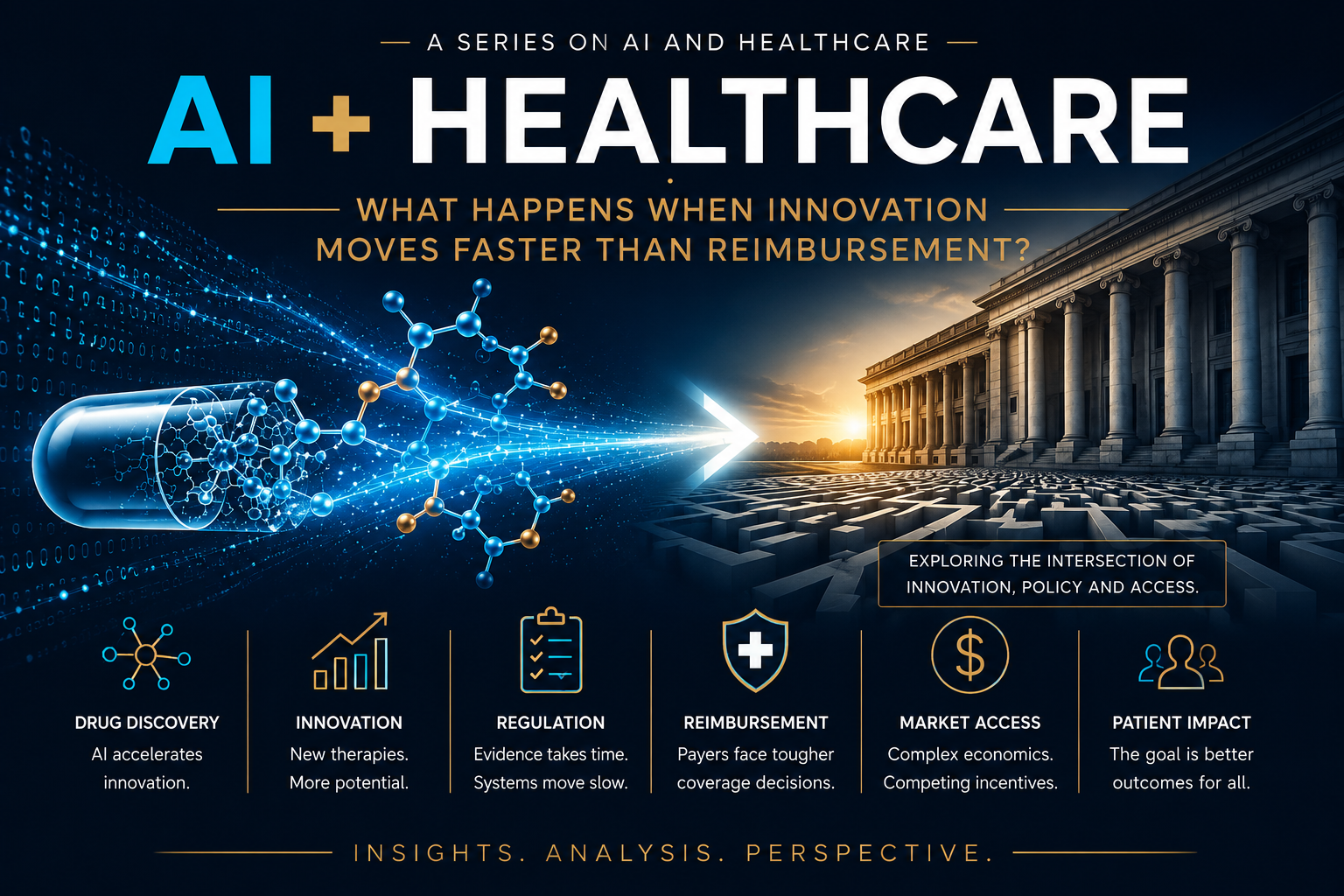
What Happens When AI Develops Drugs Faster Than Insurers Can Figure Out How to Pay for Them?
Artificial intelligence could accelerate drug development, but the healthcare payment system was built to move much more slowly. Using Sovaldi as an early example of what happens when breakthrough innovation collides with reimbursement, Ron Lanton examines whether insurers and other healthcare institutions are prepared for an AI-driven drug pipeline.
In 2013, Sovaldi gave the healthcare system a glimpse of what happens when medical innovation moves faster than the system designed to pay for it.
The drug changed the treatment of hepatitis C. Patients who once faced years of chronic disease suddenly had access to a therapy capable of curing it in a matter of weeks.
Then came the price.
A typical 12-week course cost $84,000.
The debate that followed was not simply about whether Sovaldi worked. Payers had to determine how to cover an expensive breakthrough therapy for a large patient population while operating within existing budgets, formularies, and utilization controls.
More than a decade later, artificial intelligence could create a much bigger version of that problem.
AI is beginning to play a role throughout drug development. It can help identify targets, generate potential molecules, optimize candidates, analyze data, and potentially shorten parts of a process that has traditionally taken years.
That is exciting, but it also exposes a weakness in the healthcare system.
Our ability to create new therapies may eventually begin moving faster than our ability to figure out how to pay for them.
Healthcare reimbursement was built to move carefully. Insurers rely on formularies, pharmacy and therapeutics committees, prior authorization, contracting, benefit design, and annual budgeting. Government programs operate through their own regulatory and budget processes.
There are good reasons for that structure. Evidence has to be reviewed and healthcare spending is not unlimited.
The problem is that the system was built around a relatively slow innovation cycle.
AI could change that cycle without changing the institutions surrounding it.
If AI allows more promising therapies to move through development, insurers may face more coverage decisions, potentially arriving faster and involving products with very different economics.
Sovaldi showed us how difficult one major therapeutic breakthrough could be for the payment system.
AI could make that challenge more common.
There is another issue that AI does not solve.
A treatment may save the healthcare system enormous amounts of money over time while still creating an immediate problem for the payer covering it today.
Imagine a therapy that costs $150,000 but prevents $500,000 in medical expenses over the next 15 years.
That may make sense from a societal perspective.
The insurer paying the $150,000 today may not cover that patient five years from now. An employer may change health plans. A Medicaid patient may move into another program. Medicare may eventually become responsible for that patient’s care.
The organization paying for the innovation may never capture much of the savings it creates.
AI could make drug discovery more efficient. That does not automatically mean drugs will become cheaper, and it does not fix the way we finance long-term value.
That may become one of the most important healthcare questions surrounding AI.
We spend a lot of time talking about what artificial intelligence may allow us to create.
We should also be thinking about whether the institutions surrounding healthcare can keep up with what we create.
Sovaldi forced the system to confront that problem one breakthrough drug at a time.
AI could force us to confront it across the entire system.
This is the first in a series looking at artificial intelligence through healthcare, regulation, reimbursement, capital, and the institutions that ultimately determine whether innovation reaches patients.