
When Drug Pricing Becomes Trade Policy
Drug pricing is no longer only a reimbursement issue. International price benchmarks, trade policy, manufacturing decisions and market access increasingly affect one another. Healthcare companies need a unified strategy before decisions made in one market create unexpected risks elsewhere.
An earlier version of this analysis was published by Pharmaceutical Executive on August 19, 2026. Read the full Pharmaceutical Executive article.
Drug pricing is no longer only a reimbursement issue. A price negotiated in one country can influence a benchmark in another. A manufacturing decision can affect tariff exposure, regulatory timing and government leverage. A launch strategy that once belonged primarily to a commercial team can now create consequences for finance, legal, market access and public policy.
That is the central argument of my recent Pharmaceutical Executive article, “When Drug Pricing Becomes Trade Policy.” The larger management lesson is straightforward: companies need a complete view of choices that have traditionally been divided among separate teams.
The old boundaries are breaking down
For years, pharmaceutical companies often handled European pricing, U.S. reimbursement, trade policy, manufacturing and government affairs through different teams. That approach becomes risky when a choice in one area changes the company’s exposure somewhere else.
The United States is using international price comparisons in payment policy while also examining foreign pricing systems through trade law. Manufacturing commitments can influence tariff treatment. Regulatory incentives can add time and value considerations to choices about where a product is produced.
There may be no single rule tying these policies together, but management still needs to understand how they affect the same product and business strategy.
The order of market launches now carries greater risk
Companies have always considered market size, expected price, patient access and launch cost when deciding where to introduce a product. International benchmarking and trade scrutiny add another layer.
A lower price in one market may later become relevant to a U.S. benchmark or another government negotiation. Delaying a launch can preserve pricing flexibility, but it can also postpone patient access and revenue. The right answer will differ by product and country. The mistake is allowing each market to make that choice without understanding the global consequences.
Where a company manufactures now affects more than operations
Manufacturing strategy has traditionally centered on capacity, labor, taxes, quality, supply-chain resilience and proximity to important markets. Trade and regulatory policy are adding new variables.
A company evaluating U.S. manufacturing may need to consider tariff treatment, government commitments and whether regulatory timing could affect the value of the investment. This does not mean policy incentives should override the business case. It means the business case is incomplete if those incentives and exposures are ignored.
The C-suite needs a complete view
Pricing cannot remain only with market access. Trade cannot remain only with customs counsel. Manufacturing cannot remain only with operations. Government affairs cannot be limited to monitoring developments after major commitments have already been made.
Management needs a clear way to connect product prices, launch dates, manufacturing locations, major rebates, government commitments and the rules that could affect them. That information should guide operating choices as well as acquisitions, licensing arrangements and capital projects.
Investors and boards should ask whether a product’s pricing history, launch sequence and manufacturing footprint add value, limit flexibility or create risks that have not been modeled. A traditional regulatory review may not reveal those connections unless the diligence process is designed to find them.
Preparation matters more than prediction
No management team can predict every final rule, trade action or negotiated agreement. The practical goal is to preserve flexibility and identify where one choice can change exposure elsewhere.
Companies should establish a senior review process for material pricing, launch and manufacturing commitments. They should stress-test major products against multiple policy scenarios and update the analysis as the rules develop.
The purpose is not to slow the business. It is to prevent different teams from optimizing their own part of the company while unintentionally creating risk somewhere else.
Drug pricing has become part of a wider discussion about trade, industrial policy, manufacturing, patient access and investment. Companies that understand those connections early will be better positioned to act before policy begins to limit their options.
How LSI helps
Lanton Strategies International helps healthcare and life-sciences companies understand how policy, reimbursement, market access and trade developments affect commercial strategy across the United States, Europe and the United Kingdom.
We help management identify risks early, preserve flexibility and make practical choices before changing rules begin to limit their options.
Full analysis: When Drug Pricing Becomes Trade Policy
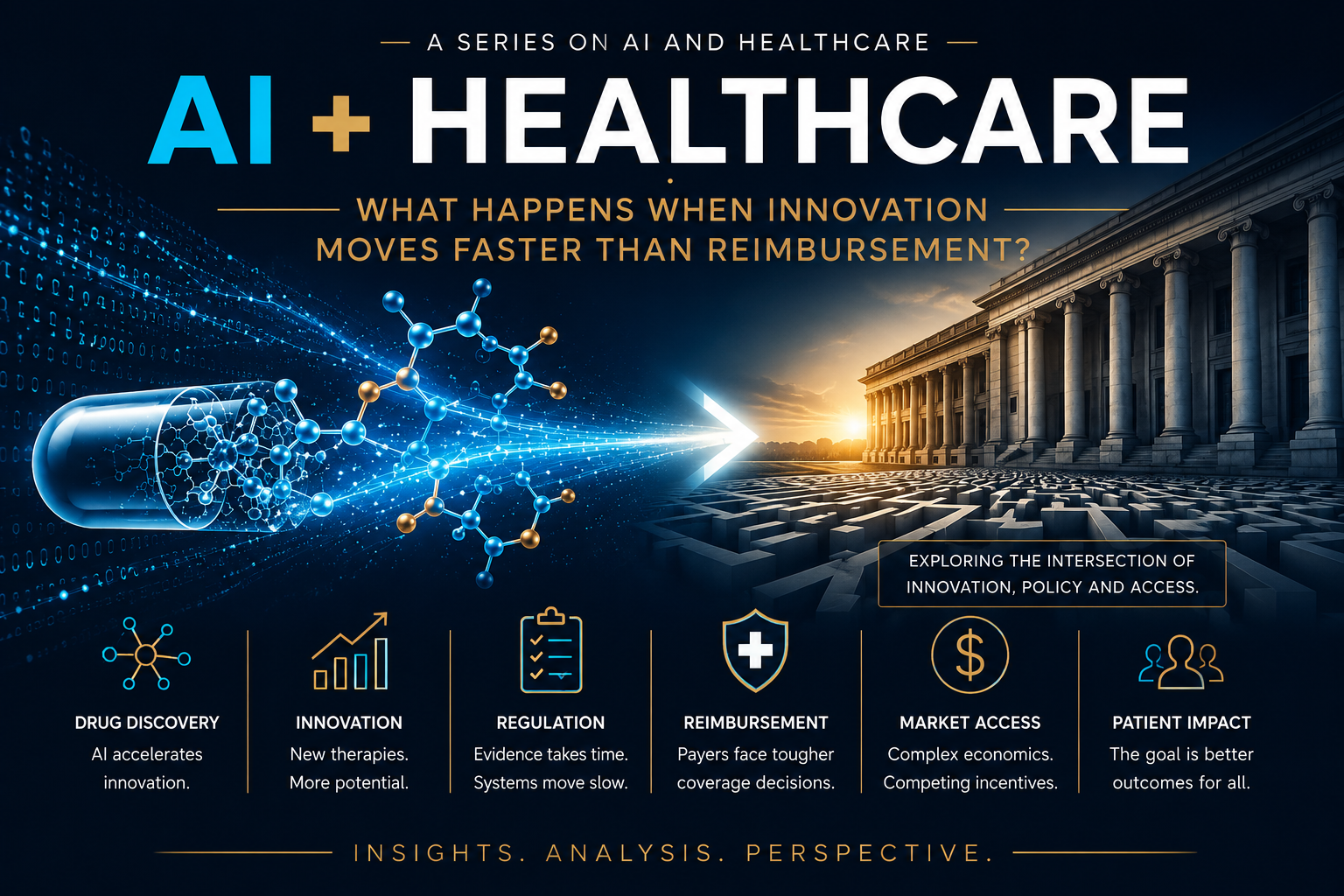
What Happens When AI Develops Drugs Faster Than Insurers Can Figure Out How to Pay for Them?
Artificial intelligence could accelerate drug development, but the healthcare payment system was built to move much more slowly. Using Sovaldi as an early example of what happens when breakthrough innovation collides with reimbursement, Ron Lanton examines whether insurers and other healthcare institutions are prepared for an AI-driven drug pipeline.
In 2013, Sovaldi gave the healthcare system a glimpse of what happens when medical innovation moves faster than the system designed to pay for it.
The drug changed the treatment of hepatitis C. Patients who once faced years of chronic disease suddenly had access to a therapy capable of curing it in a matter of weeks.
Then came the price.
A typical 12-week course cost $84,000.
The debate that followed was not simply about whether Sovaldi worked. Payers had to determine how to cover an expensive breakthrough therapy for a large patient population while operating within existing budgets, formularies, and utilization controls.
More than a decade later, artificial intelligence could create a much bigger version of that problem.
AI is beginning to play a role throughout drug development. It can help identify targets, generate potential molecules, optimize candidates, analyze data, and potentially shorten parts of a process that has traditionally taken years.
That is exciting, but it also exposes a weakness in the healthcare system.
Our ability to create new therapies may eventually begin moving faster than our ability to figure out how to pay for them.
Healthcare reimbursement was built to move carefully. Insurers rely on formularies, pharmacy and therapeutics committees, prior authorization, contracting, benefit design, and annual budgeting. Government programs operate through their own regulatory and budget processes.
There are good reasons for that structure. Evidence has to be reviewed and healthcare spending is not unlimited.
The problem is that the system was built around a relatively slow innovation cycle.
AI could change that cycle without changing the institutions surrounding it.
If AI allows more promising therapies to move through development, insurers may face more coverage decisions, potentially arriving faster and involving products with very different economics.
Sovaldi showed us how difficult one major therapeutic breakthrough could be for the payment system.
AI could make that challenge more common.
There is another issue that AI does not solve.
A treatment may save the healthcare system enormous amounts of money over time while still creating an immediate problem for the payer covering it today.
Imagine a therapy that costs $150,000 but prevents $500,000 in medical expenses over the next 15 years.
That may make sense from a societal perspective.
The insurer paying the $150,000 today may not cover that patient five years from now. An employer may change health plans. A Medicaid patient may move into another program. Medicare may eventually become responsible for that patient’s care.
The organization paying for the innovation may never capture much of the savings it creates.
AI could make drug discovery more efficient. That does not automatically mean drugs will become cheaper, and it does not fix the way we finance long-term value.
That may become one of the most important healthcare questions surrounding AI.
We spend a lot of time talking about what artificial intelligence may allow us to create.
We should also be thinking about whether the institutions surrounding healthcare can keep up with what we create.
Sovaldi forced the system to confront that problem one breakthrough drug at a time.
AI could force us to confront it across the entire system.
This is the first in a series looking at artificial intelligence through healthcare, regulation, reimbursement, capital, and the institutions that ultimately determine whether innovation reaches patients.

Congress Is Exploring Whether Medicare Can Incentivize Domestic Drug Manufacturing
A bipartisan Senate proposal would direct CMS to explore whether Medicare reimbursement could help strengthen domestic pharmaceutical manufacturing. While the bill does not change payment policy, it reflects a broader question with significant strategic implications: could reimbursement become another tool for shaping manufacturing investment and supply chain resilience?
Pharmaceutical manufacturing has traditionally been influenced by trade policy, tax incentives, and government investment. A new bipartisan Senate proposal suggests Congress is considering another lever: whether Medicare reimbursement could help encourage domestic drug manufacturing.
Legislation introduced by Sens. Adam Schiff, Democrat of California, and Rick Scott, Republican of Florida, would direct the Centers for Medicare and Medicaid Services to examine how its drug coverage and reimbursement authorities could reduce U.S. reliance on foreign pharmaceutical manufacturers. CMS would report its findings to Congress and could recommend reimbursement approaches that support domestic production of active pharmaceutical ingredients, key starting materials, and other critical pharmaceutical inputs.
The bill does not change Medicare payment policy. Instead, it asks whether Medicare's purchasing power could become part of a broader strategy to strengthen the pharmaceutical supply chain.
That question is significant.
For decades, manufacturing policy has largely been shaped through trade measures, grants, and tax incentives. This proposal introduces the possibility that healthcare reimbursement could also influence where pharmaceutical products are manufactured. If reimbursement eventually recognizes domestic production or supply chain resilience, manufacturing decisions could carry implications beyond cost and operational efficiency.
The proposal also reflects a broader policy trend. Governments are increasingly treating pharmaceutical manufacturing as strategic infrastructure rather than simply a commercial activity. The European Union's Critical Medicines Act pursues similar objectives through different policy mechanisms, highlighting a growing international focus on supply chain resilience.
Whether or not this legislation advances, it reflects a broader shift in policymaking. Manufacturing strategy is no longer being shaped solely by operations, trade, and tax policy. Congress is beginning to explore whether healthcare reimbursement should become part of that equation as well.
For pharmaceutical companies, the legislation is less important than the question it asks. If reimbursement policy eventually becomes another tool for strengthening domestic manufacturing, market strategy, capital planning, and manufacturing decisions may become more closely connected than they have been in the past.
At Lanton Strategies International, these are the kinds of intersections we focus on: where reimbursement, trade policy, industrial strategy, and commercial decision making begin to shape one another.
LSI Insight: This article reflects the independent analysis of Lanton Strategies International regarding emerging policy developments and their potential implications for healthcare, life sciences, and health technology organizations. It is intended for informational purposes only and should not be construed as legal, regulatory, or policy advice.

What a Potential AstraZeneca and Bristol Myers Squibb Deal Says About Global Pharma Strategy
A potential AstraZeneca and Bristol Myers Squibb combination highlights the strategic pressures reshaping global pharmaceuticals, including patent exposure, United States market access, regulatory review, portfolio overlap, and whether greater scale can deliver sustainable commercial value.
The reported possibility of a combination between AstraZeneca and Bristol Myers Squibb highlights the strategic pressures shaping the pharmaceutical industry.
For Bristol Myers Squibb, a transaction could provide greater stability as several major products approach patent expiration. For AstraZeneca, the appeal would include deeper access to the United States market and a broader portfolio across oncology, cardiovascular medicine, hematology, and cell therapy.
The challenge is that greater scale does not automatically produce greater value. A transaction of this size would require the companies to manage extensive therapeutic overlap, global regulatory review, integration risk, and the possibility that required divestitures could weaken the strategic rationale for the deal.
Ron Lanton recently discussed these issues with Pharmaceutical Executive, including how regulators may evaluate competing products and pipeline programs, which shareholders could benefit most, and why the United States, European Union, and United Kingdom may approach the transaction differently.
The broader lesson is that pharmaceutical mergers are no longer simply questions of product portfolios and purchase price. They are also questions of patent exposure, market access, regulatory strategy, research priorities, and whether global scale can translate into sustainable commercial value.
Read the full Pharmaceutical Executive conversation here.

When Drug Pricing Becomes a Trade Dispute
The U.S. Section 301 investigation into Germany’s pharmaceutical pricing and reimbursement policies shows how quickly healthcare cost-containment can become a trade enforcement issue. For life sciences companies operating across the Atlantic corridor, pricing policy, market access, reimbursement strategy, and geopolitical risk are becoming part of the same commercial planning conversation.
The United States has launched a Section 301 investigation into Germany over pharmaceutical pricing and reimbursement policies, with USTR characterizing the issue as “persistent underpayment for innovative pharmaceutical products.”
For multinational pharmaceutical and biotech companies operating across the Atlantic corridor, this is an important regulatory and market access signal.
The investigation appears tied to German healthcare cost-containment legislation that could further reduce spending on innovative medicines. While the trade process may take time to unfold, the larger issue is already clear: domestic healthcare pricing policy is now being viewed through a trade enforcement lens.
That matters because Germany is not just another European market. It is one of the most important pharmaceutical markets in Europe, and its reimbursement policies can influence launch sequencing, pricing strategy, and broader European market planning.
For life sciences companies, this creates a new layer of uncertainty. Pricing, reimbursement, intellectual property protection, market access, and trade enforcement are no longer separate conversations. They are becoming part of the same commercial risk analysis.
The investigation also reflects a broader U.S. policy argument: American patients and companies should not carry a disproportionate share of the global cost of pharmaceutical research and development while other wealthy markets use aggressive reimbursement controls to limit spending.
This does not mean tariffs are inevitable. USTR has suggested that the issue could potentially be resolved through negotiations, including a path that expands access to innovative medicines while ensuring fair reimbursement for pharmaceuticals made by American workers. Still, the use of Section 301 against Germany is significant because it shows how quickly pricing policy can become a trade dispute.
For pharmaceutical and biotech companies, the takeaway is clear. Market-entry strategy cannot focus only on regulatory approval or clinical value. It also has to account for how governments use pricing rules, budget controls, and trade tools to shape the value of innovation.
This is exactly the type of geopolitical and market access risk we track closely at Lanton Strategies International. As pricing policy and international trade enforcement continue to intersect, companies will need to think more carefully about where they launch, how they price, and how policy risk affects long-term commercial planning.

When Procurement Policy Becomes Market Strategy
The UK’s new value-based procurement guidance for medical technology shows how healthcare purchasing is becoming a market strategy issue. For companies entering or scaling across the UK, U.S., and European markets, evidence of system-level value is becoming central to adoption and growth.
The UK Government’s new guidance on value-based procurement for medical technology is worth paying attention to.
At first glance, this may seem like a procurement update. I see it as something larger: a signal about how healthcare systems are starting to connect purchasing decisions with market access, adoption, and long-term value.
For medtech, digital health, diagnostics, AI, and other healthcare technology companies, the message is pretty clear. It is no longer enough to show that a product works, that it is innovative, or that it comes in at a competitive price.
The NHS is moving toward a broader way of measuring value.
That means companies will need to explain how their products fit into the health system itself. Does the product improve the patient pathway? Does it reduce pressure on clinicians and staff? Does it create value beyond the initial purchase price?
Healthcare systems are under pressure everywhere. They are dealing with workforce shortages, budget constraints, supply chain concerns, and rising expectations from patients and policymakers.
Even with political change in the UK, the larger direction is still important for companies to understand. Healthcare systems are under pressure to show value, manage cost, and make purchasing decisions that support adoption across the system.
A product that can help solve those problems will be viewed differently than a product that only competes on cost.
Procurement is becoming less about the cheapest available option and more about whether a product can be adopted, used, funded, and scaled within the system. For companies entering the UK market, that changes how they should think about evidence, reimbursement, commercial planning, and market access.
It also matters for companies looking across the U.S., UK, and European markets. Approval is important, but approval alone does not create adoption. Companies need to be able to show why their product belongs inside the system and how it supports the larger goals of that system.
This is the type of shift companies should not treat as background policy. It can affect how a product is positioned, how evidence is developed, and how market entry is planned.
When procurement frameworks start measuring broader value, they do more than guide purchasing decisions. They shape how companies position themselves, how investors assess opportunity, and how healthcare innovation actually reaches the market.
For companies trying to enter or expand in healthcare markets, procurement cannot be treated as a back-office issue anymore. It is becoming part of the strategy.

Beyond the Deal Activity: Strategic Questions Emerging from Global Pharmaceutical R&D
Pharmaceutical innovation is becoming increasingly global, but bringing new therapies to market requires more than scientific success. As healthcare companies expand cross-border partnerships and licensing activity, executives must also navigate reimbursement systems, trade policy, market access challenges, and geopolitical considerations that shape commercial outcomes.
A recent Pharmaceutical Executive article seen here examined China's growing role in pharmaceutical R&D and licensing activity. I was pleased to contribute to that discussion, which highlights an important trend shaping the future of healthcare and life sciences.
The growth in cross-border pharmaceutical partnerships reflects a broader reality: innovation is becoming increasingly global. Scientific talent, clinical development capabilities, manufacturing capacity, and investment opportunities are no longer concentrated in a single market. Pharmaceutical companies are evaluating opportunities wherever they believe innovation can be developed efficiently and brought to patients successfully.
While much attention is understandably focused on the volume of deal activity, the more interesting questions may lie beneath the transactions themselves.
Healthcare executives and investors are increasingly evaluating factors that extend beyond the science. Reimbursement environments, market access pathways, trade policy, industrial strategy, supply chain resilience, and geopolitical developments are all becoming part of the strategic conversation.
The challenge is that scientific innovation and commercial success do not always follow the same path.
A promising therapy may emerge from one market, attract investment from another, undergo clinical development across multiple regions, and ultimately depend on regulatory approvals, reimbursement decisions, and commercialization strategies in entirely different jurisdictions. The path from discovery to patient access is becoming more interconnected and, in many cases, more complex.
For healthcare and life sciences leaders, this raises several important questions.
How should companies evaluate policy risk alongside scientific opportunity?
How should investors think about reimbursement uncertainty when assessing long-term value?
How should organizations balance global sourcing of innovation with evolving national priorities related to healthcare security, industrial policy, and supply chain resilience?
These questions do not diminish the importance of scientific innovation. Rather, they recognize that innovation alone is not always sufficient to determine market success.
As pharmaceutical development becomes more global, the healthcare organizations that succeed may be those that understand both the science and the broader strategic environment in which that science operates.
The Pharmaceutical Executive article is a valuable contribution to this discussion and highlights an important development that healthcare leaders should continue to watch closely. The implications extend well beyond individual transactions and point toward a healthcare market that is becoming increasingly interconnected across innovation, policy, capital, and commercialization.

The EU’s Tech Sovereignty Package Is a Market Strategy Issue
Europe’s Tech Sovereignty Package is more than a digital policy announcement. For healthcare, life sciences, healthtech, AI, cloud, and data infrastructure companies operating across the U.S., UK, and EU, it signals a broader shift in market access, resilience planning, procurement strategy, and cross-border risk.
The European Commission’s new European Technological Sovereignty Package should not be read as another routine digital policy announcement. It is better understood as part of a broader move by Europe to reduce dependence on external technology providers, build domestic capacity, and give European institutions, companies, and public bodies more control over the infrastructure that will shape the next phase of the digital economy.
For companies operating across the U.S., UK, and EU, especially in artificial intelligence, cloud computing, semiconductors, open-source software, healthtech, life sciences, and data infrastructure, this is now a market access issue.
Europe is making clear that digital infrastructure is becoming part of industrial policy, resilience planning, procurement strategy, and geopolitical risk management.
The package includes Chips Act 2.0, the Cloud and AI Development Act, an EU Open Source Strategy, and a Strategic Roadmap for Digitalisation and AI in Energy. Together, these measures are intended to strengthen Europe’s position in semiconductors, cloud, AI, and open-source technologies, while reducing structural dependencies on non-EU providers.
For years, many non-EU companies approached Europe through a familiar lens. The main questions were data privacy, regulatory compliance, competition rules, and local market adaptation. Those issues still matter, but Europe is now asking a larger question: who controls the technology, data, infrastructure, and supply chains that its economy and public services rely on?
This does not mean Europe is closing itself off from U.S. or other non-EU companies. That would be too simplistic. The better reading is that Europe is hedging.
Countries are not necessarily abandoning U.S. technology, U.S. platforms, or U.S. partners. They are planning for a world where dependence on any single outside market, supplier, cloud infrastructure, policy environment, or geopolitical relationship carries more risk than it used to.
For healthcare, life sciences, and healthtech companies, this should be taken seriously. Digital infrastructure is now tied directly to clinical operations, patient data, diagnostics, AI-enabled decision support, hospital workflow, research platforms, energy reliability, and public-sector trust. These are not abstract technology debates. They affect how companies enter markets, structure partnerships, raise capital, select vendors, and explain their long-term resilience to customers and investors.
The market access questions are changing.
Where is your infrastructure hosted? How much of your product depends on non-EU cloud capacity? How resilient is your semiconductor or hardware supply chain? Can your software architecture support interoperability and openness where European buyers expect it? Can your company explain how it fits within Europe’s digital sovereignty agenda without appearing misaligned with it?
These questions will not be answered by legal compliance.
They require a broader strategy that connects policy, procurement, infrastructure, investor risk, and commercial positioning. A company may be technically compliant and still be poorly positioned for where the market is moving. That is especially true in sectors where governments are major purchasers, regulators, funders, or strategic partners.
The practical lesson is straightforward: policy is now part of the business plan.
Europe is building a digital ecosystem designed to increase resilience and reduce strategic dependence. Companies that understand that trajectory early will be better positioned to enter, grow, partner, and compete. Companies that treat it as just another regulatory announcement may miss the broader market signal.
Lanton Strategies International advises cross-border healthcare, life sciences, healthtech, and technology companies on U.S., UK, and EU policy, regulatory risk, market-entry strategy, and commercial positioning.

“Buy European” Is Becoming a Healthcare Market Strategy
Europe’s critical medicines agreement shows how healthcare market strategy is becoming more closely tied to procurement, manufacturing capacity, supply-chain resilience, and policy risk. For healthcare, life sciences, medtech, diagnostics, and pharmaceutical companies looking across the U.S., UK, and EU, “Buy European” may become more than a procurement phrase. It may become a market-entry strategy question.
Europe’s latest agreement on critical medicines deserves more attention from companies looking at the EU market.
The immediate issue is medicine shortages. That matters on its own. Health systems need reliable access to essential medicines. Patients need confidence that the products they depend on will be available. Governments are under pressure to reduce the risk of disruption, especially after several years of pandemic shocks, geopolitical tension, supply-chain strain, and growing concern about overdependence on production outside Europe.
The business strategy side may prove just as important.
The European Parliament’s recent announcement on critical medicines points toward a more assertive European approach to healthcare supply. The agreement is designed to reduce dependency on non-EU countries, strengthen the EU pharmaceutical sector, encourage joint procurement, and support a “Buy European” approach in certain procurement settings.
This is important for healthcare and life sciences companies.
It suggests that Europe is thinking about medicines through a wider strategic lens. Availability, manufacturing capacity, procurement, competitiveness, and supply-chain resilience are moving closer together. A company entering the EU market may begin with regulatory questions, but the commercial strategy has to go further.
Where is the product made? How resilient is the supply chain? How exposed is the company to third-country dependencies? How will procurement bodies view the product? Does the company’s market presence fit the direction European policymakers are trying to move?
Those questions are becoming part of the market-entry conversation earlier than they used to.
That does not mean Europe is closing itself off. It does mean companies should pay closer attention to how policy language is changing.
For years, many companies looked at international growth through familiar categories. Regulatory approval was one workstream. Reimbursement was another. Distribution sat somewhere else. Capital strategy often moved on its own track. That approach is becoming harder to sustain in healthcare.
The EU’s critical medicines agenda shows why.
A medicine shortage is not only a supply problem. It can become a procurement problem, a manufacturing problem, a pricing problem, a political problem, and eventually a market-access problem. Once governments begin treating supply resilience as part of public health policy, companies have to think differently about how they position themselves in the market.
This is especially important for pharmaceutical, medtech, diagnostics, and life sciences companies operating across the U.S., UK, and EU.
In the U.S., companies already have to think through FDA expectations, CMS reimbursement, payer adoption, pricing pressure, investor scrutiny, and the operational realities of commercialization. In Europe, the conversation increasingly includes EU-level pharmaceutical reform, national reimbursement systems, procurement decisions, industrial capacity, and supply-chain resilience. In the UK, life sciences policy is also being tied more directly to economic growth, manufacturing, innovation, and health system transformation.
That creates a different kind of strategy question.
A company may have a strong product and still face problems if the strategy does not account for how the product will be paid for, purchased, distributed, manufactured, and supported. A diagnostics company may need to think about evidence, reimbursement, clinical workflow, and procurement at the same time. A medtech company may need to understand hospital adoption, distribution infrastructure, regulatory expectations, and investor assumptions before choosing how to expand. A pharmaceutical company may need to evaluate whether its manufacturing footprint and supply-chain design fit a market where governments are paying closer attention to resilience.
This is where the “Buy European” language becomes important.
It is not only a phrase about procurement. It is a sign of where healthcare strategy is heading. Europe is placing more value on supply security, industrial capacity, and strategic resilience. Companies do not have to overreact to that, but they should not ignore it.
For U.S. companies looking at Europe, this means the EU market should be viewed as more than another regulatory and commercial opportunity. It is a market shaped by public health priorities, national health systems, EU industrial policy, and growing concern about dependency.
For European companies looking at the U.S., the lesson runs in the other direction. The U.S. opportunity may be large, but it comes with its own policy, reimbursement, pricing, and capital-market pressures.
The practical takeaway is simple: healthcare market entry has to be built earlier and more realistically.
Regulatory clearance or approval remains important, but it does not answer enough of the business questions. The better strategy begins before launch, before fundraising assumptions are locked in, and before companies commit to a market pathway that may not match how the market is actually evolving.
The companies that manage this well will understand the policy environment before it becomes a commercial problem. They will pay attention to how governments are defining resilience. They will think through procurement, supply chains, reimbursement, and market access early enough to make better decisions.
Europe’s critical medicines agreement is an early signal worth watching.
“Buy European” may sound like a procurement preference. For healthcare and life sciences companies, it may also become a market strategy question.